The AI layer
| Capability | What it does | Where it struggles |
|---|
| Object detection | Finds each visible animal in a frame | Small, distant, or heavily hidden animals |
| Instance segmentation | Separates touching or overlapping animals | Dense groups with little visible outline |
| Multi-object tracking | Holds a temporary ID while an animal stays in view | Long occlusions and animals leaving and re-entering frame |
| Pose (keypoint) estimation | Locates hooves, joints, and back line for gait and posture | Needs a clear side or top view and a fixed path |
| Re-identification | Matches the same animal across time or cameras | Uniform coats, changing light, and different viewpoints |
| Edge inference | Runs models on local devices where signal is weak | Limited compute restricts model size and speed |
Specific model architectures change quickly, so Folio3 AI selects and tests them per project on your footage. For background on one widely used detection family, see our YOLOv8 architecture explainer. The same capabilities support AI animal detection software for species beyond cattle.
Tracking IDs vs. long-term re-identification
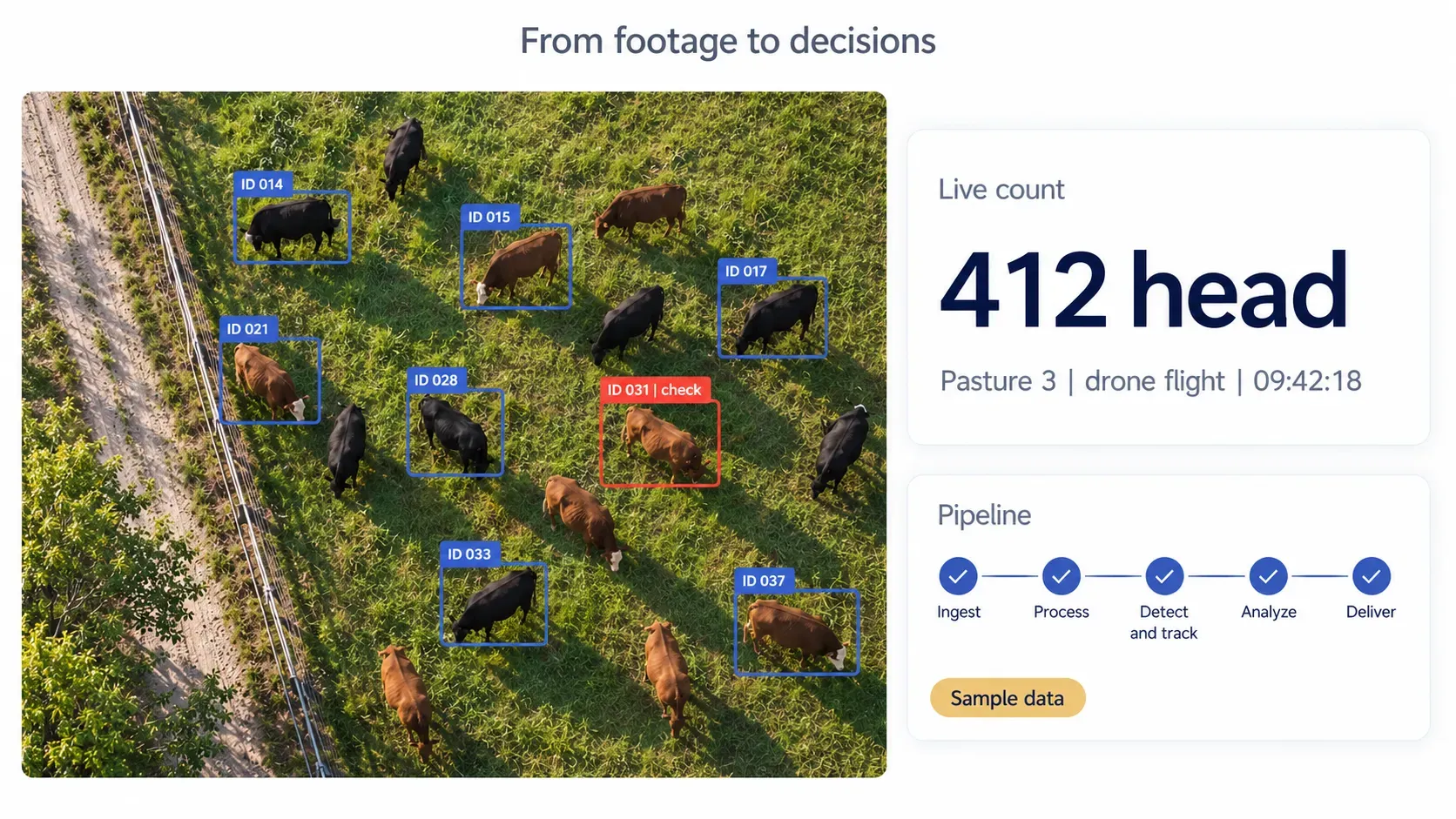
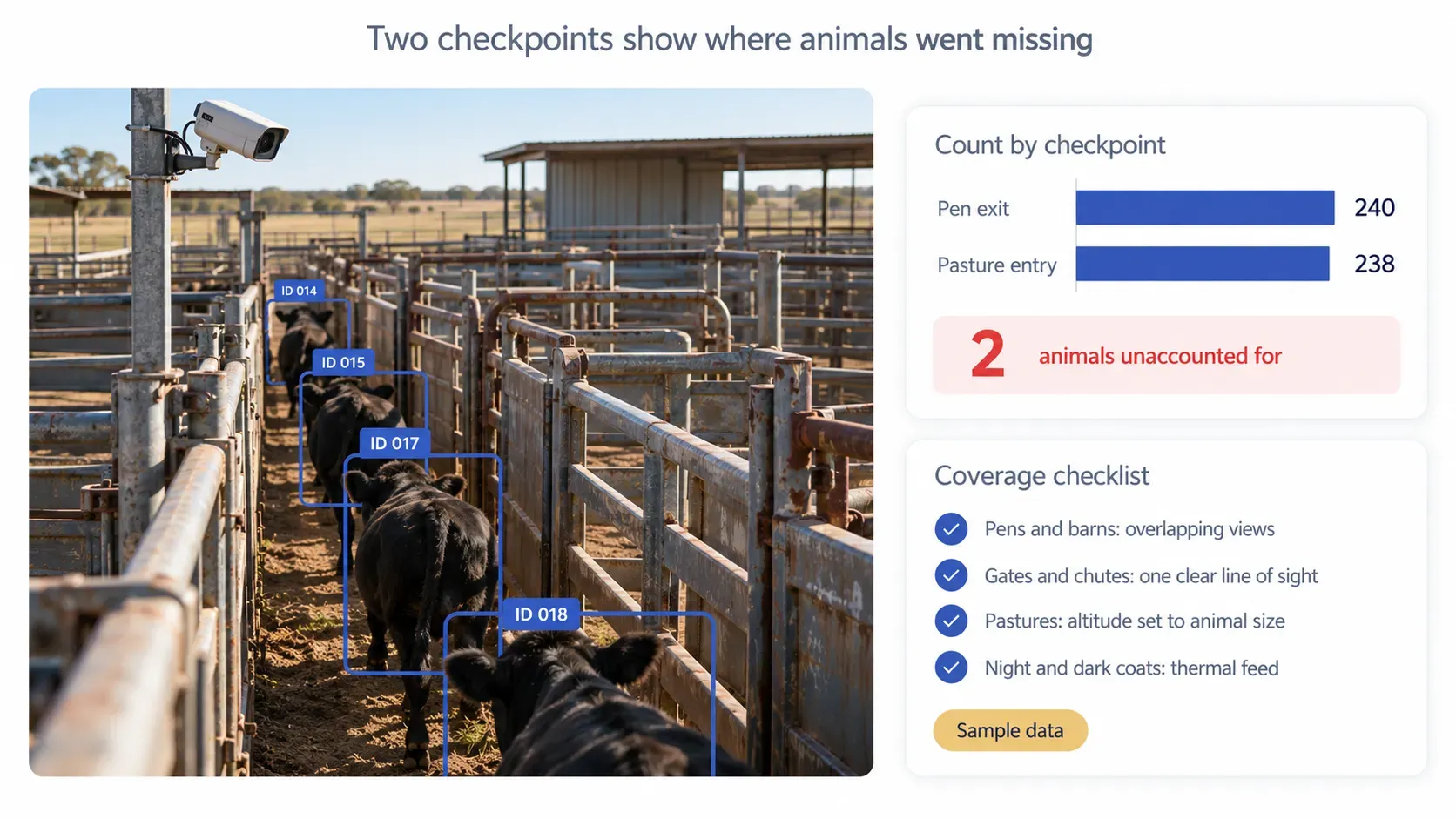
Two different things are often both called "tracking." A tracking ID is temporary. It is assigned when an animal enters view and held while the animal stays visible. When the animal leaves the frame, stays hidden for long, or appears on another camera, it usually receives a new ID. That is enough to count animals through a gate or across a single drone pass.
Re-identification means recognizing the same individual days later or on a different camera, using coat pattern, body shape, or a link to RFID or ear-tag reads. It is harder, especially for solid-colored breeds, and needs its own validation. If a vendor promises one ID per animal across the whole operation, ask how re-identification works and what accuracy was measured on farms like yours.
Data sources the AI reads
- CCTV and fixed cameras at pens, barns, gates, and chutes
- Drone aerial footage, as used in drone-based animal detection
- Thermal camera feeds, which can help at night, in fog, or with dark coats where testing confirms the benefit
- Wearables and RFID data, which add an identity check to video
- IoT environmental sensors for temperature, humidity, and air quality
Who owns raw footage, labels, and trained models depends on the contract. Agree it in writing before the project starts.
Vision-based vs. wearable data sources
| Factor | Vision-based | Wearable |
|---|
| Animal contact required | None | Tag or collar on each animal |
| Cost per head | Camera cost shared across every animal in view | Device cost multiplied by herd size, plus replacements |
| Scalability across herds | Add cameras or flights, not devices per animal | Grows with every tag and reader |
| Data captured | Count, position, movement, gait, posture, and group behavior, where the view allows | Per-animal activity, location, and sometimes temperature |
| Identity | Temporary IDs in view; long-term ID needs re-identification or RFID | Built in through the device |
| Best-fit operations | Pastures, feedlots, pens, transport points | Dairy herds and intensive per-animal tracking |
| Maintenance burden | Lens cleaning, camera positioning, and model retraining | Batteries, lost tags, and reader upkeep |
Operations that need both can read about animal monitoring features and trade-offs.